
“Grim picture” as water rates likely to increase again in Flower Mound
September 21, 2026
By Mary Beth Gahan
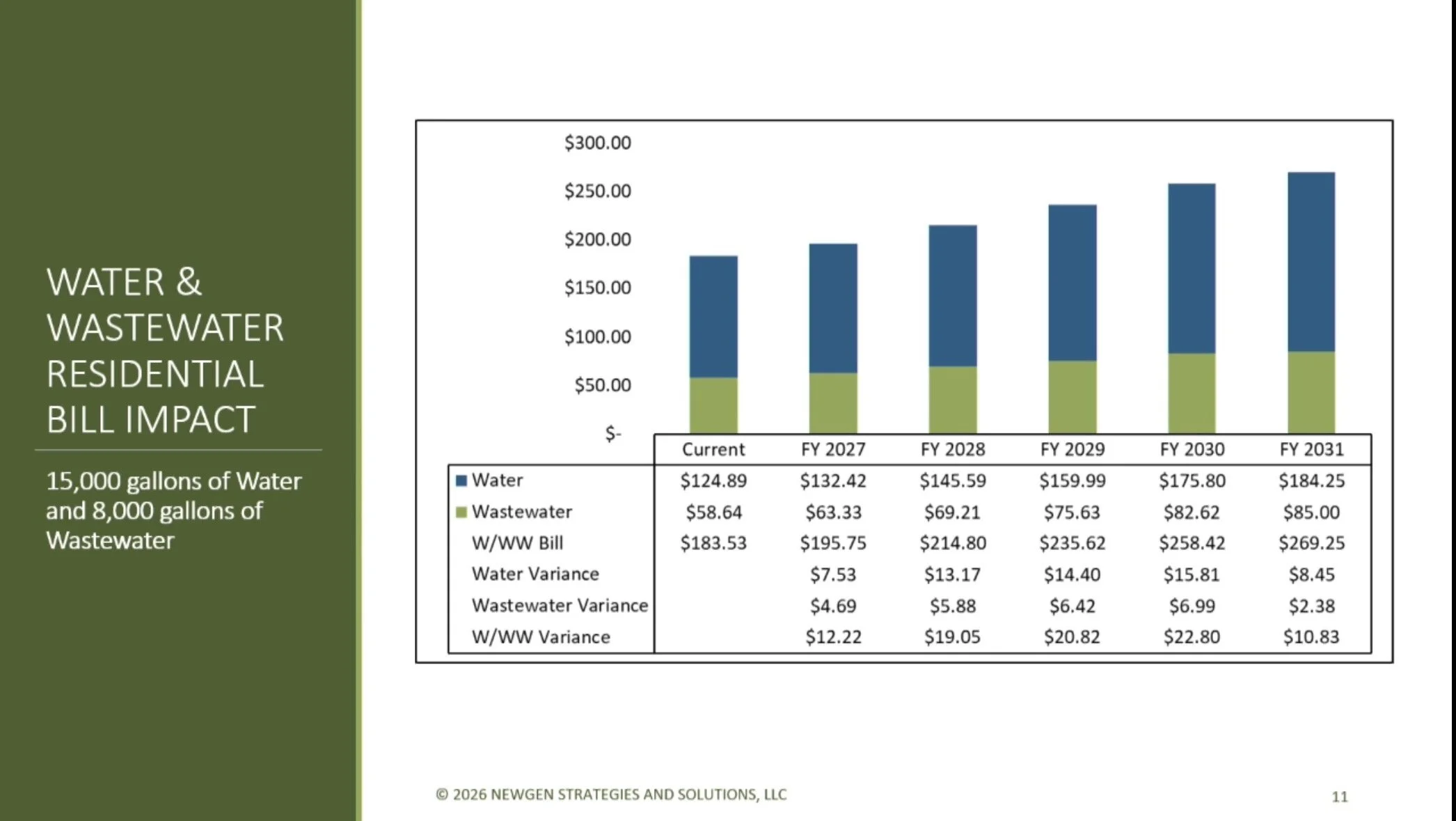
Water bills for residents could go up more than 6 percent, or $12 a month on average, starting in November if town council approves a recommended water rate increase at Monday’s meeting.
Inflation and the wholesale cost of water have continued to rise and be passed on to customers. Rate increases are projected to be even higher the next four years, which would cause Flower Mound residents to pay an estimated $85 more each month by the fall of 2030.
Mayor Pro Tem Adam Schiestel called it “a grim picture.”
At a town council meeting on Aug. 17, NewGen Strategies & Solutions, the company that conducted a cost-of-service and rate design survey for the town, recommended the increase and laid out the estimates for what is needed to pay for capital projects and rising wholesale costs through 2030.
The town receives its water from Dallas Water Utilities and the Upper Trinity Regional Water District. Wholesale cost, the amount of money Flower Mound pays those water districts, makes up around 60 percent of the water budget. The town is projected to pay $30.1 million in wholesale water costs next fiscal year.
The company recommended a 6.05 percent increase for water rates next fiscal year, which starts on Oct. 1. Wastewater rates, which account for about 30 percent of the bill that residents pay, would go up 8 percent. The increase would be taken into account for water used in October and reflected on the bill received in November.
If approved, an average monthly water and wastewater bill will go from $183.53 to $195.75. The minimum monthly water bill will rise from $46.64 to $49.46. For sewer, the new minimum will be $28.53, up from $26.42.
Currently, Flower Mound’s average bill sits at the middle of the pack when compared to other DFW locations. After the increase, it’ll be toward the higher end, sitting below Richardson and Southlake. That could change if other municipalities increase their rates as well.
Since 2014, rates have increased, on average 3.35 percent. Recent years have been higher — closer to 6 percent — a trend that is likely to continue.
For fiscal year 2028, which starts next October, through fiscal year 2030, the company recommended a 9.88 percent increase for water rates each year. For wastewater, the recommendation is a 9.25 percent increase each year.
“We’re going to have to do something about that,” Schiestel said. “We can’t do 10 percent increases every year.”
Those estimates are still being worked out and could be brought down by reworking the capital plan for replacing and repairing infrastructure like plants, pumps, and pipes.
“We want to make sure we’re preventing rate shock,” said Chris Ekrut, CEO of NewGen Strategies & Solutions.
Flower Mound operates and owns a sewer treatment plant. Capital improvements and debt are what make up a large portion of the wastewater budget.
There are several wastewater projects, some costing more than a million dollars, in the town’s capital improvement plan. In July, town council approved a construction agreement for $4.7 million to rehabilitate the wastewater treatment plan.
The facility was built in 2000 and there have been 90 unscheduled repair work orders in the last 15 years, according to the town. In one instance, the treatment area screens failed and workers had to manually rake and remove raw sewage debris.
“If we delay that capital investment, all that does is cause that system to break down that much more and can actually drive that cost higher,” Ekrut said.
On average, Flower Mound residents use 8,000 gallons of wastewater every month, according to NewGen Strategies & Solutions.
The average household uses 15,000 gallons of water each month. In other municipalities in north Texas, the average is between 5,000 and 8,000 gallons per month.
“You are a higher water use community,” Ekrut said.
Flower Mound has implemented a long-term water conservation plan, which allows residents to water their lawns with automatic sprinklers twice a week.