
Tree removal permit for large post oak holds up phase two of The Point
In May 2017, Direct Retail Partners hired a company to complete a tree survey for Alexan at The Point, a 35-acre mixed-use development east of of FM 2499 and north of Silveron Boulevard.
Most of the trees had trunks less than 12 inches in diameter, drawing little notice in a town where tree preservation is top of mind. None required a permit for removal.
Four specimen trees, post oaks with diameters around 22 inches, were marked to be preserved in a 3-acre park on the northeast side.
Just south of that area, where there were plans for diagonal parking spaces next to an apartment building, tree 212 was marked for removal. It was classified as a multi-trunk post oak, meaning two trees had grown together to form a larger tree. In those cases, the trunk is measured above the fork.
Tree 212 was noted as having a DBH, or diameter at breast height, of 19” and 16”.
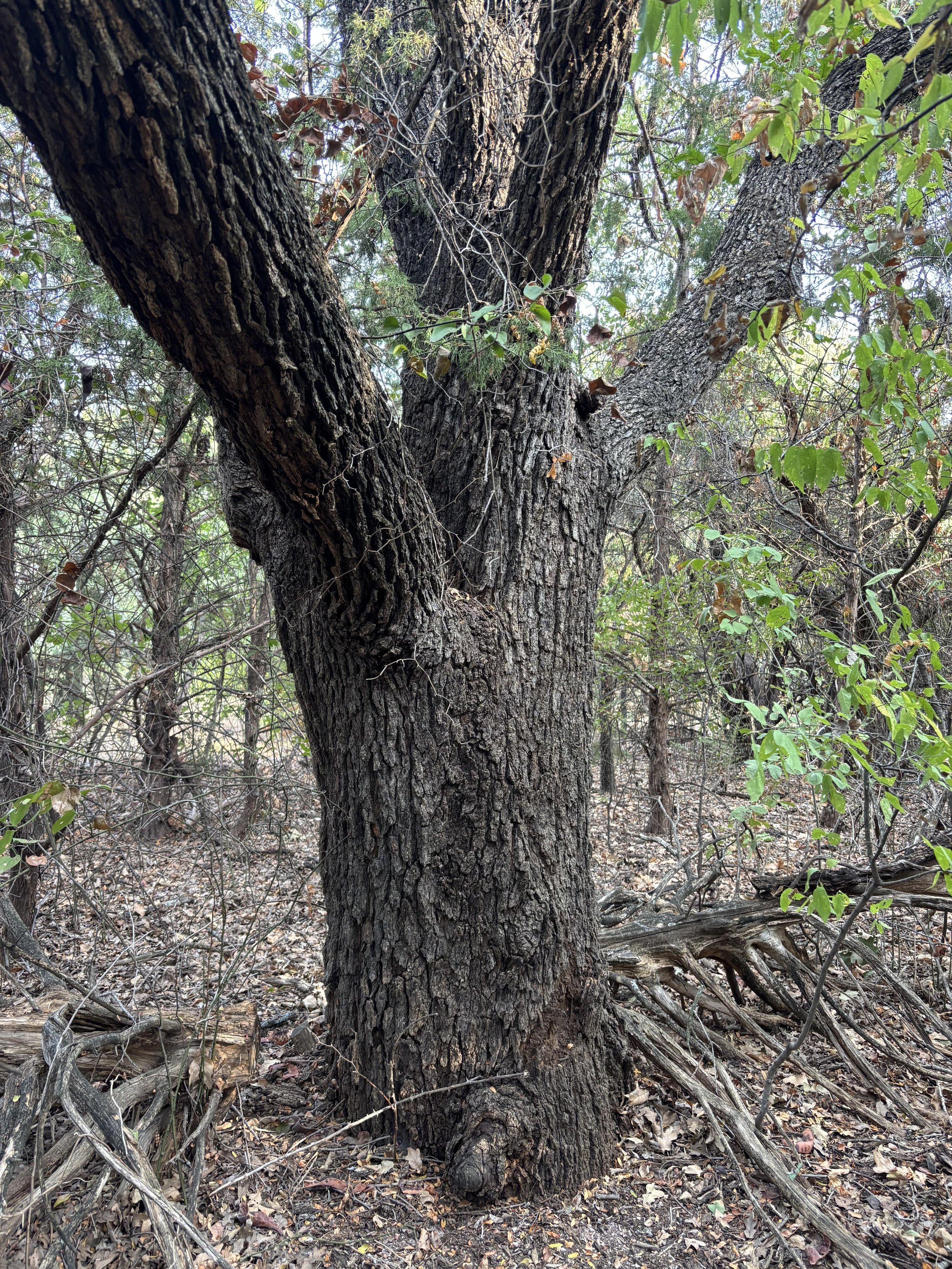
Nine years later, that tree has been determined to be a single post oak with a DBH of 28.5”, a size that requires a permit to be cleared. It’s the largest and oldest tree on the property.
At least one council member is not in favor of allowing the developer to remove it and leaving it in place would interfere with a future road and utilities, causing a snag in plans for a development that was designed and approved nearly a decade ago.
The application process for The Point was bumpy from the beginning. At the December 2017 town council meeting where the planned development was up for consideration, Mayor Pro Tem asked Don McDaniel asked Mayor Tom Hayden, who had spoken negatively about the project before it came before the council, to hand the gavel over to the deputy mayor pro tem in the interest of “fairness, equity, and decorum.” Hayden declined.
The discussion on The Point took five hours that night, mostly with talk about the type of commercial space presented, the reputation of apartment tenants, and park fees to be paid by the developer.
In the end, the rezoning passed 3-2.
The Point has two phases to its development. Phase one included 301 apartments, 32 townhomes, and a hotel. Phase two was allowed to begin once the developer completed 57,500 square feet of commercial space.
A Hampton Inn is currently under construction on the site and since it is 64,697 square feet, it satisfies the commercial requirement needed to move to phase two, which includes nearly 300 apartments.
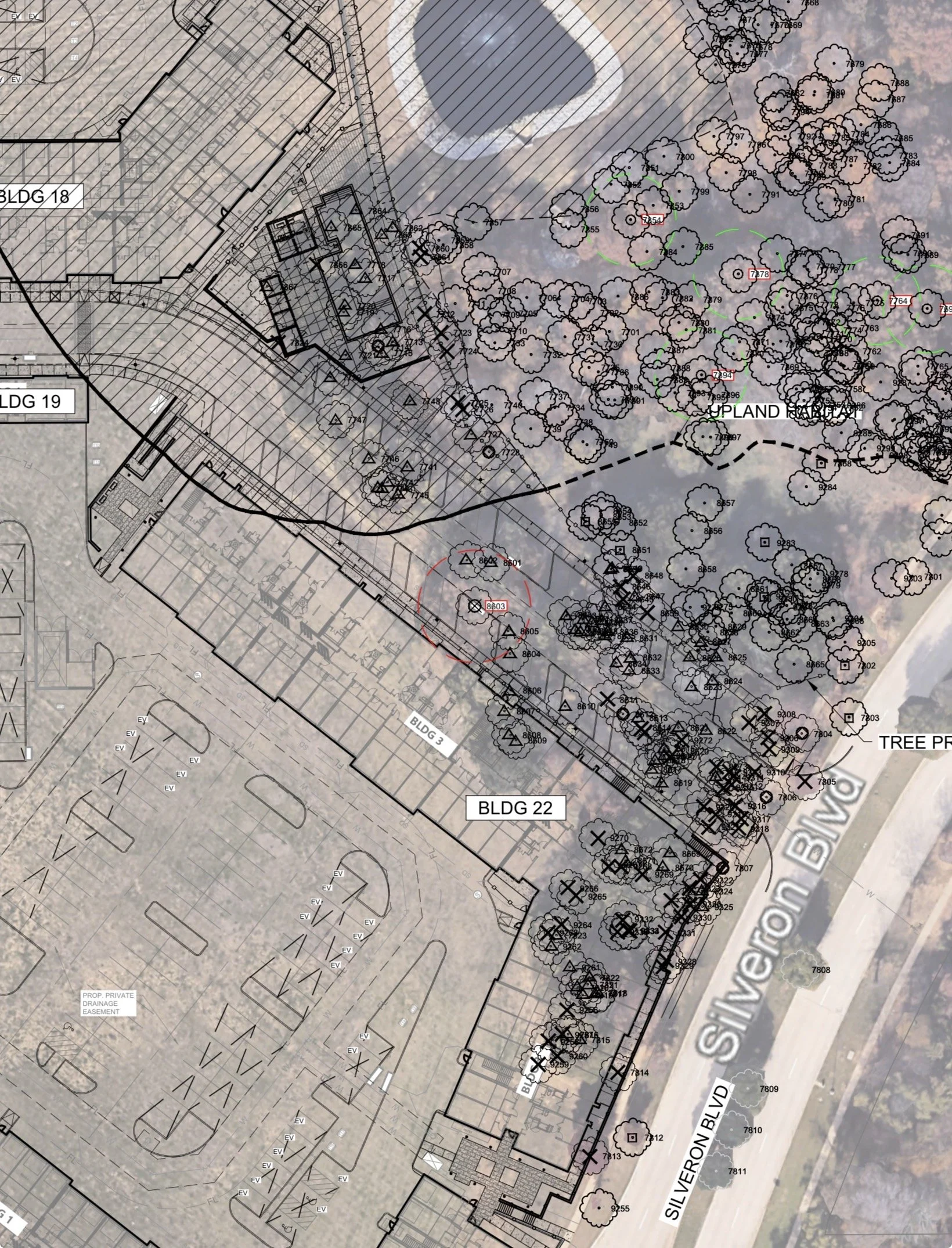
Prior to phase two being started, an updated tree survey had to be completed. There was one tree removal permit submitted as a result. The developer would need to remove Tree 212, or tree #8603, as it was now called.
On a map with the application, the tree is marked next to an apartment building at the edge of the parking spaces and where the road begins. Its canopy would touch the building and cover the entire width of the road.
At the environmental conservation commission meeting in August, Matt Vinten, an architect with LandDesign, said the post oak tree impacts a planned street and would affect utilities like a water and sewer line that will run under the asphalt. If the road was moved slightly north away from the tree, it would affect Point Park and more trees would need to be cut, he said.
The developer plans to keep all the trees as they are right now in Point Park and create a trail system that runs through it.
The post oak tree up for removal could not stay where it is and have the sidewalk and other infrastructure built around it because it has over 1,000 square feet of critical root zone, said Jake Speckhals, the town’s urban forester.
“It wouldn’t have a very likely chance of surviving,” Speckhals said. “If it was a pine, or another species that could take it better, but not a post oak.”
To mitigate the removal of 29 other trees that are not specimen trees, the developer would need to plant 42 new trees. They intend to install 62. They will come from the approved tree list that the town maintains.
They will not be post oaks.
“We can’t get them,” Vinten said.
The environmental conservation commission voted unanimously to recommend approval of tree #8603, but when it came before town council on Monday, Mayor Pro Tem Adam Schiestel had questions about how it was misclassified nine years ago.
Speckhals pointed to the included bark just below the fork of the tree — which is at breast height — and said the inverted V sometimes indicates two trees that have grown together. But the root flare, where the bottom of the trunk and ground meet, is round. An oval root flare would be indicative of two trees.
“In my opinion, most likely, it is a single tree,” Speckhals said.
Schiestel said the misidentification in the original survey was “more than an oversight” and pointed to the close vote in 2017.
“It looks more like somebody was stretching the definition of split trunks in a way that would allow that tree to be removed without much scrutiny,” Schiestel said of the 2017 tree survey.
After going into closed session with the town attorney, the town council delayed a vote on the permit Monday night and the applicant plans to come back in the future after discussing how to proceed.
If the council denies the tree removal permit, the developer would have to rework concept plans and go through the review process with the town. Depending on how much of a change is made to the plans, the amendment may have to go before the planning and zoning commission and town council for approval.